

Double progression inside a rep range
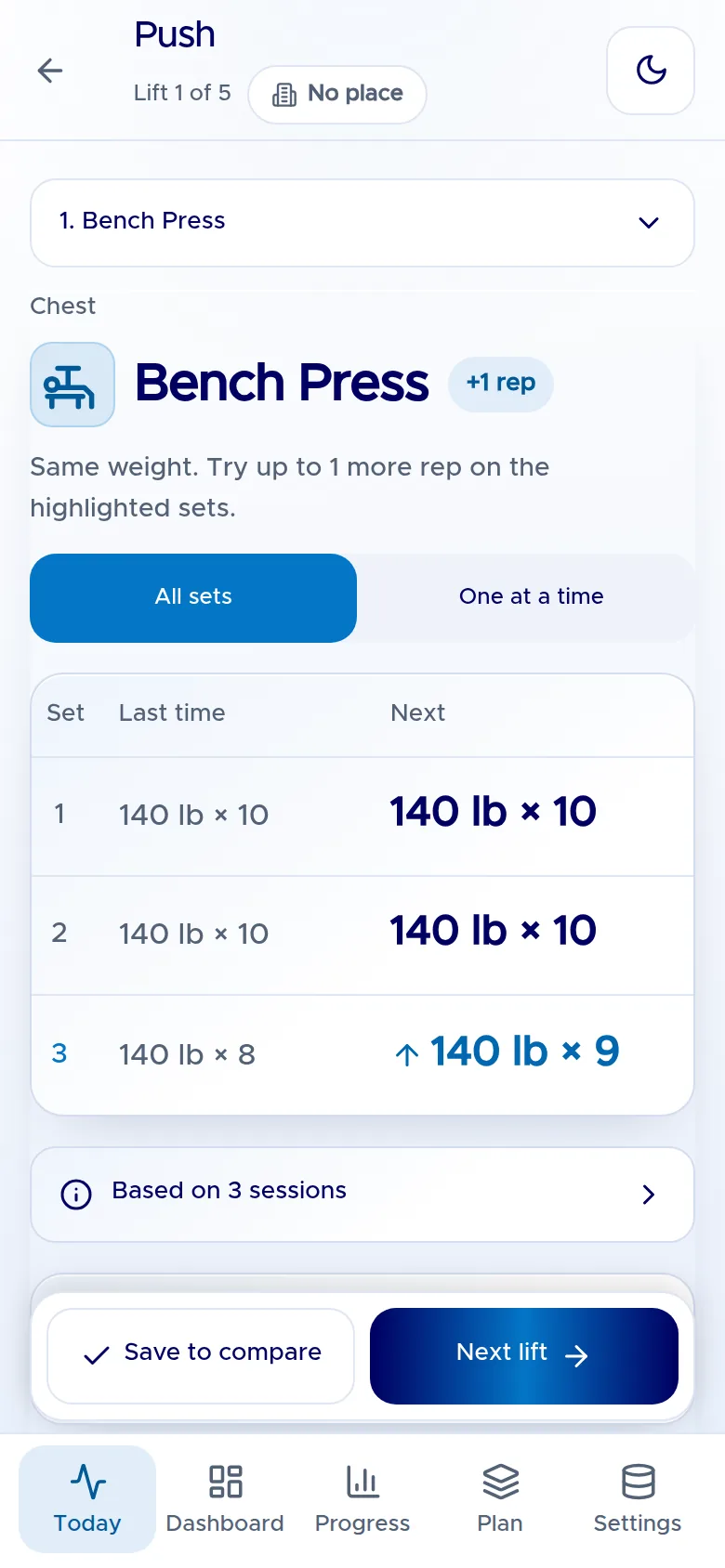
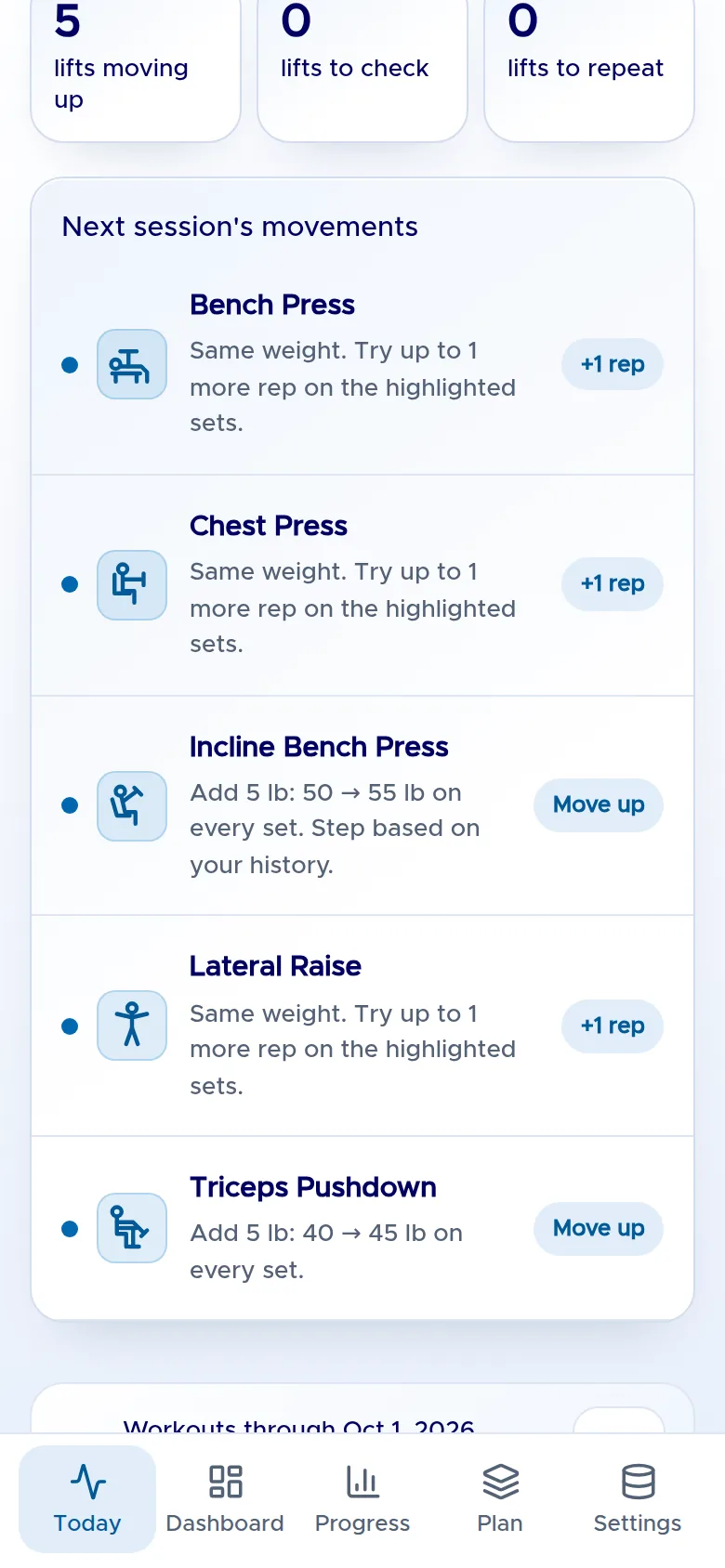
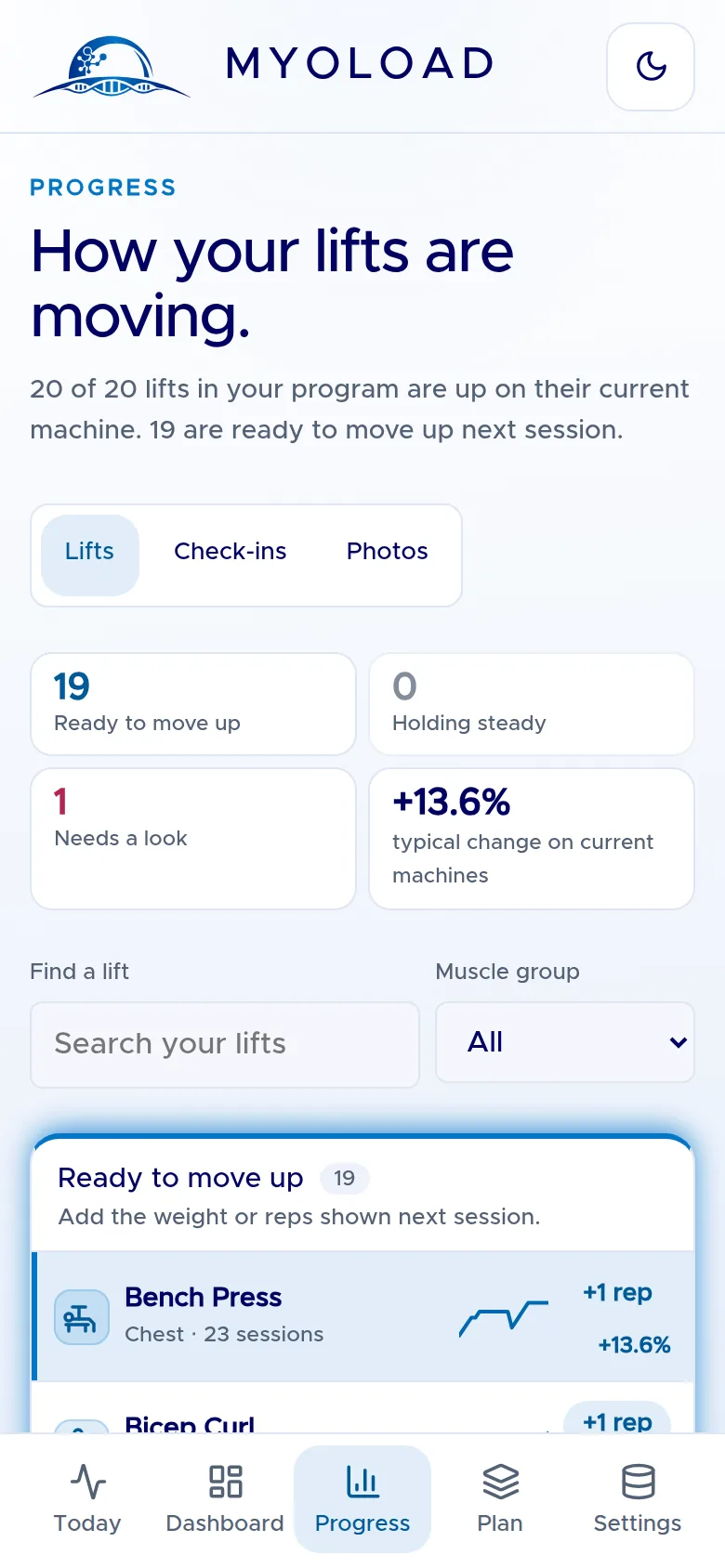
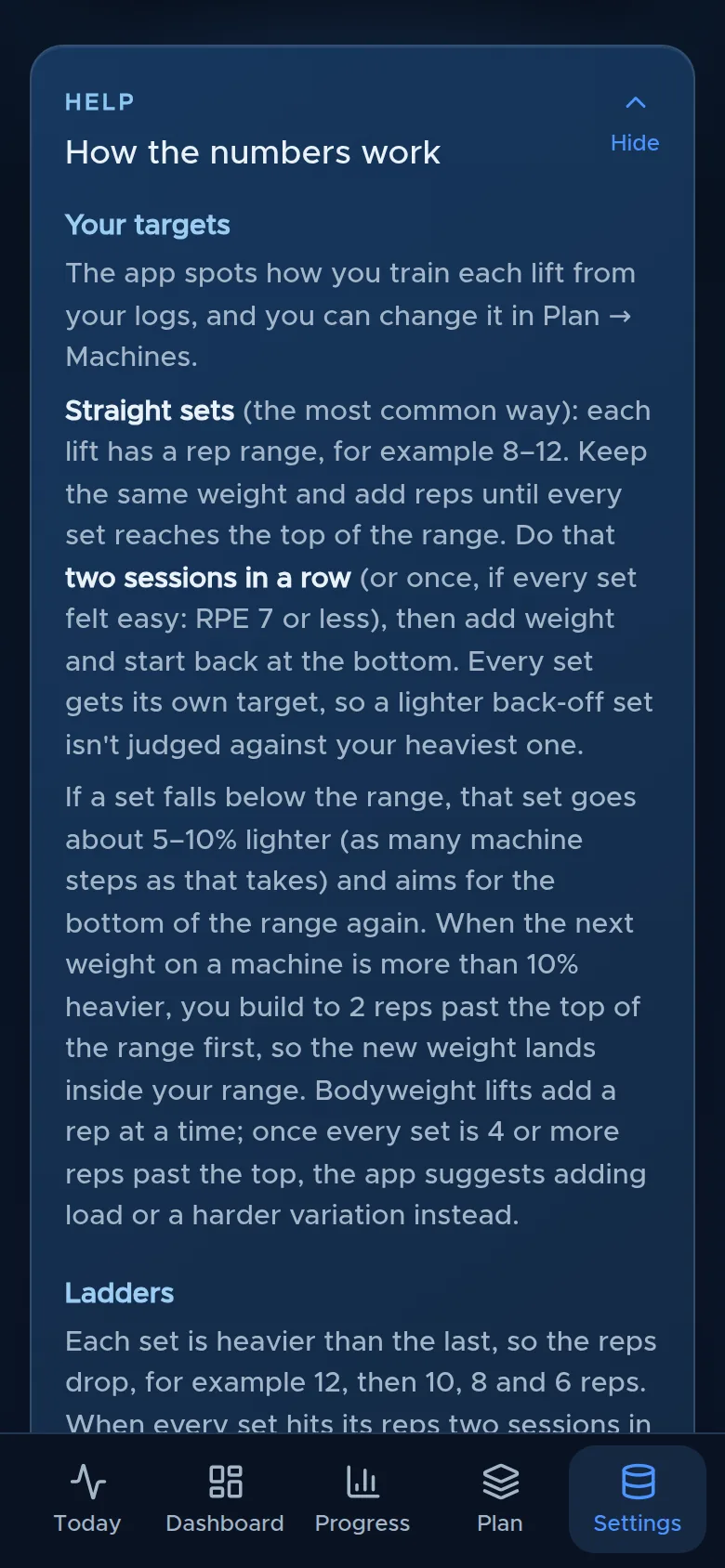
Each lift has a rep range. By default that is 6–10 reps for most lifts, 8–12 for squats, flyes, extensions and leg curls, 10–15 for calves, crunches, lateral and rear-delt raises, and 12–20 for kickbacks, abduction, adduction and rotation work. You can change any of them. Keep the weight and add reps until every set reaches the top of the range, then add weight and start again at the bottom.
This is double progression: reps first, then load. The American College of Sports Medicine recommends a 2–10% increase in load once you can complete the current load for one to two repetitions over the desired number, and research on the repetition continuum shows muscle can be built across a wide spectrum of loads, which is why a range of reps, rather than one fixed number, is a sound target.12
Ladders (each set heavier than the last, for example 12, 10, 8 reps) follow the same idea: when every set hits its target two sessions in a row (or once, if every set felt easy), each set moves up to the next set's weight and the last set moves up a step. The targets come from your own recent pattern.